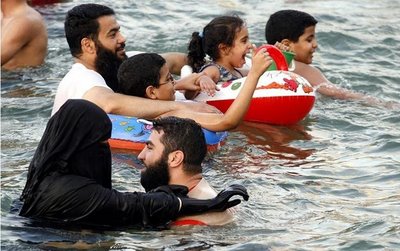
You live where??? Saudi Arabia?!

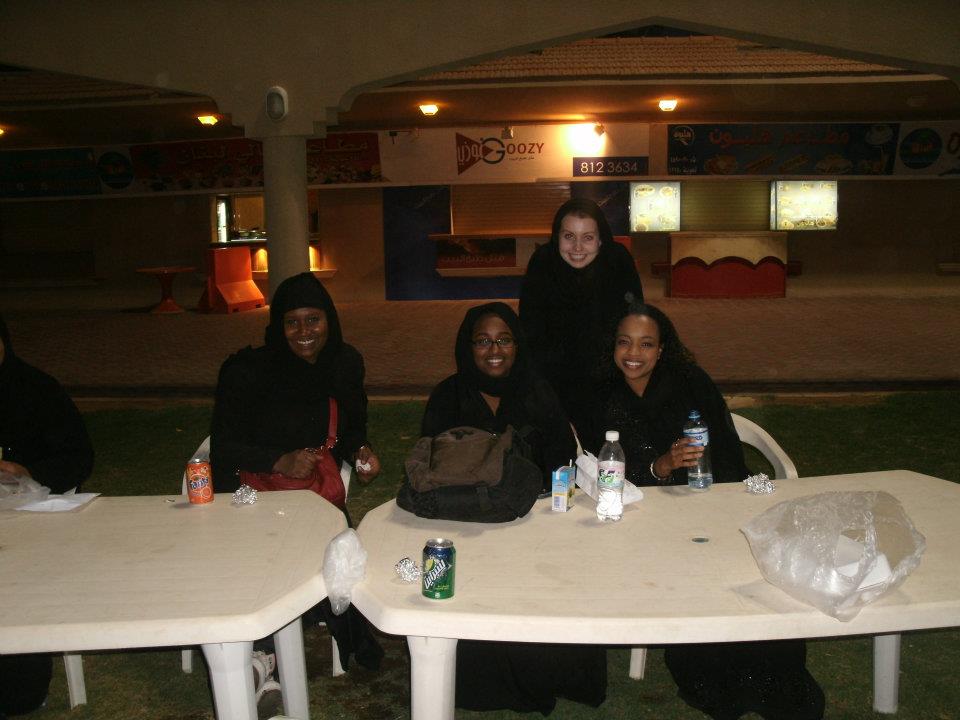
I just realized that the entire time that I’ve been writing on Saudi Arabia, I’ve never given a proper introduction about the city I live in, Riyadh… Riyadh is the conservative capital, almost directly in the northern center of the country. Contrary to popular belief, its urban inhabitants do not go to work by camel, nor are they totally ignorant to western ways. The streets are bumper to bumper with foreign taxis who break every driving rule that you’d find in an organized city. Here, you will only find a man behind the wheel, and the occasional 12 year old driving his mother to the mall, which also explains the craziness in the streets.
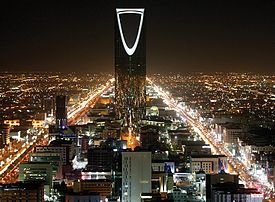
The Arabs of Riyadh range from Pakistani, to Emirati, to African. There’s a rainbow of complexions, wide variety of hair textures, and all shapes and sizes. I assumed that the personality of Saudis would be very dry, and I blame media for this misconception. However, the college-age crowd that I teach are very giggly and immature. I’ve found most of the older Saudi women to be incredibly friendly and giving. They are all close-knit to their friends and family. And once you’ve made your way into one of these categories, you’re always taken care of.

Family, shopping, and religion make up the life of these people. It’s very simple… and makes me realize how us foreigners strive for so much to keep us happy. Some may say that the Saudi way of life is quite backwards… Yes, it’s very different.. and no, it’s not something I’d like to live in for more than a year.. But, if it’s all that they know, it works for them, and they’re the ones who will be raising their next generations in it.. I guess a passer-by’s opinion of the place, doesn’t count for much.

The religion of Saudi Arabia is Islam. This is seen in everything a Saudi does, from the 5 daily prayers, to throwing an “Inshallah” (Christian equivalent of “Lord Willing”) in their casual conversations. For nearly 30 minutes per prayer call, shops shut down, waiters take a break, and you even get locked into the grocery stores and restaurants. Time is very precious for non-Muslim foreigners here, because of this!

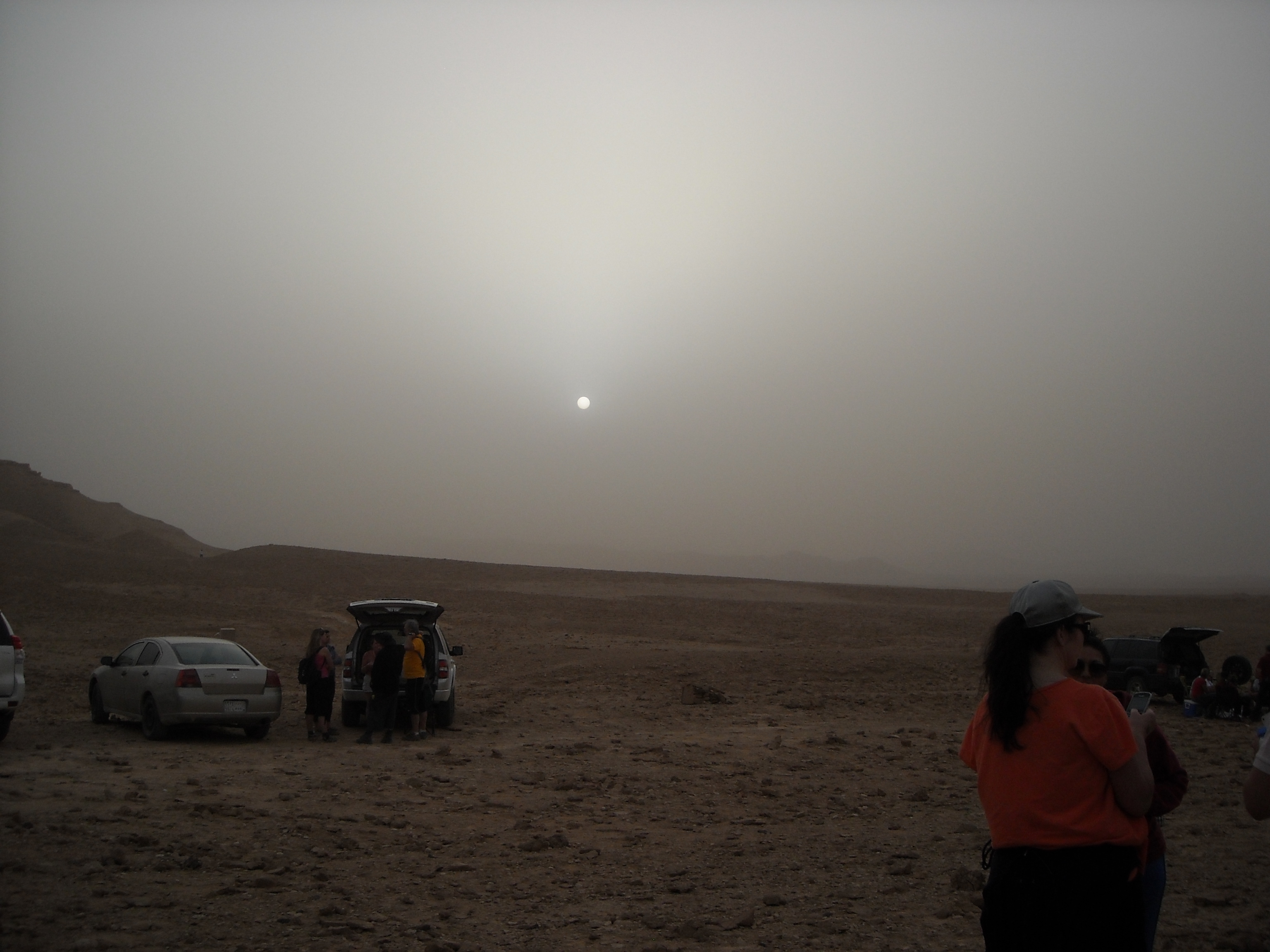
The weather, so far, has been a little iffy. There’s been a weekly rainstorm with the most booming of thunders. Within 15 minutes, the city is flooded, due to the lack of sewers. With the piles of puddles combined with 90+ degree weather, you can imagine our problem with mosquitos. There’s an occasional sandstorm, and it makes for an awesome sight! This is almost always followed by rain, to clean the city and clear the air. Another one of God’s awesome solutions to our problems.

Most of the royal family lives within Riyadh, which plays a part in why it is more conservative compared to the port city of Jeddah. This family is quite extensive, spanning into the thousands since multiple wives and an abundance of children isn’t shunned. It is likely to have a prince or princess in the classroom.

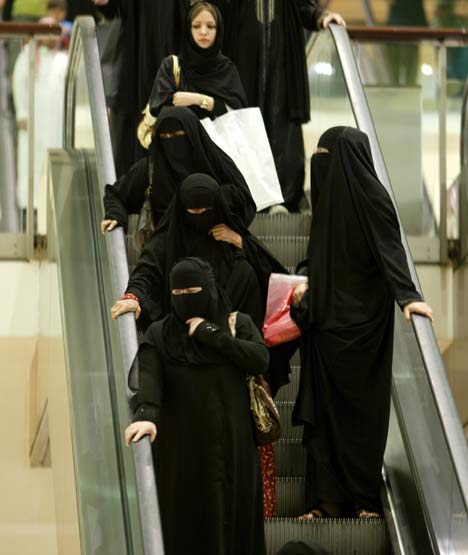
The laws of Riyadh can be quite strict, which is why the city is considered a hardship. Men and women outside of the family, are almost always segregated. Women wear black-based abayas. Coverings may be a little more enforced in comparison to other cities. Music in public is outlawed. The mentioning of pigs and dogs, the picture of a woman’s face, or pop culture references are not allowed in the classroom.

The food is a great mix of the Gulf countries. You can find Saudi kabsa (a mix of meat, rices, and spices), Turkish shawarma (meat wrap w/ veggies and sometimes french fries), and various Yemeni dishes. A lot of dishes include chick peas/hummus and rice. A popular Saudi snack consists of dates (my new fave, but oh so high in sugar!) and Arabic tea. Of course there’s also your Burger King, McDonalds, Applebees, and Krispy Kreme. Two things you will not find in this country is pork and alcohol.
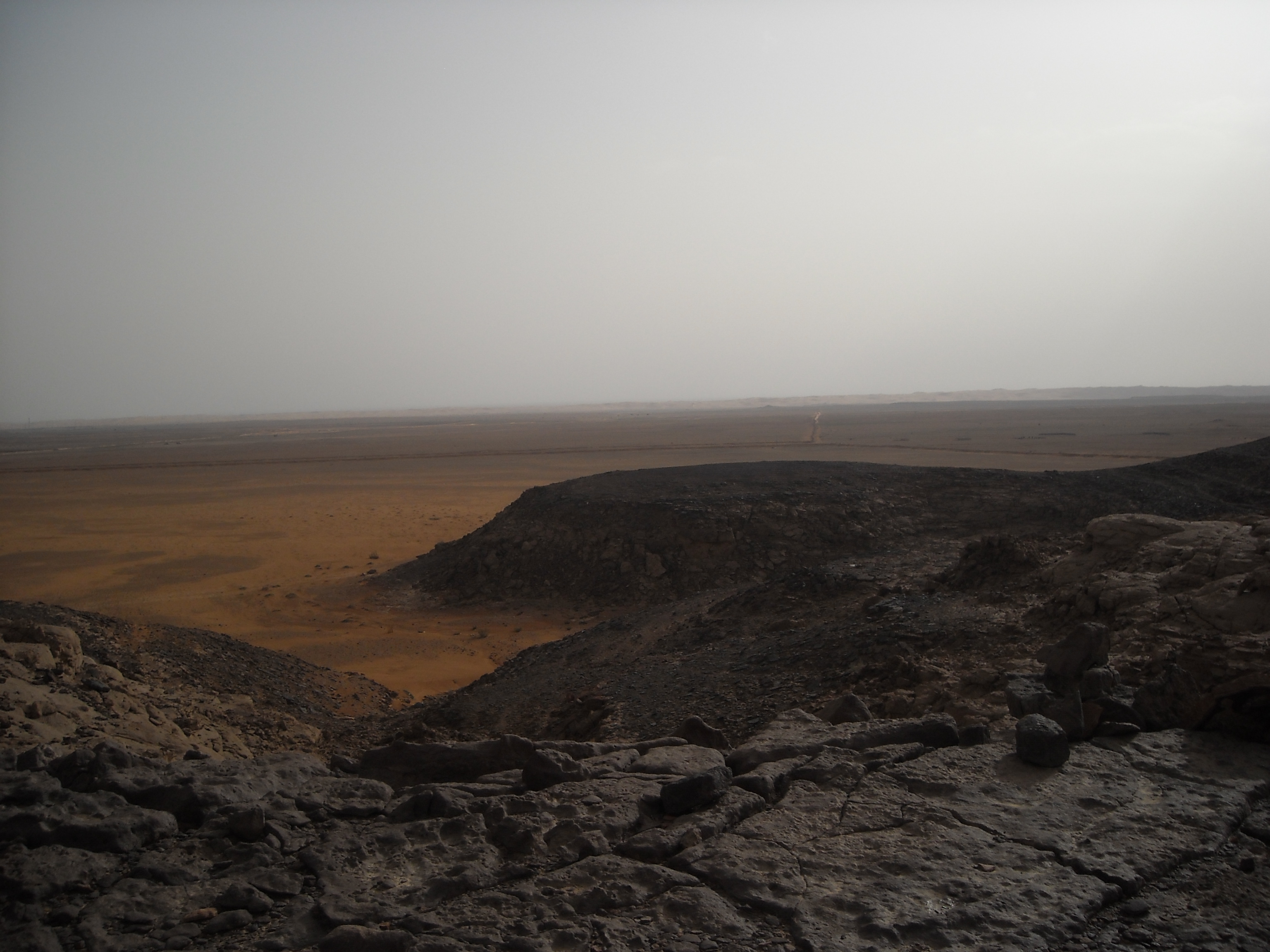
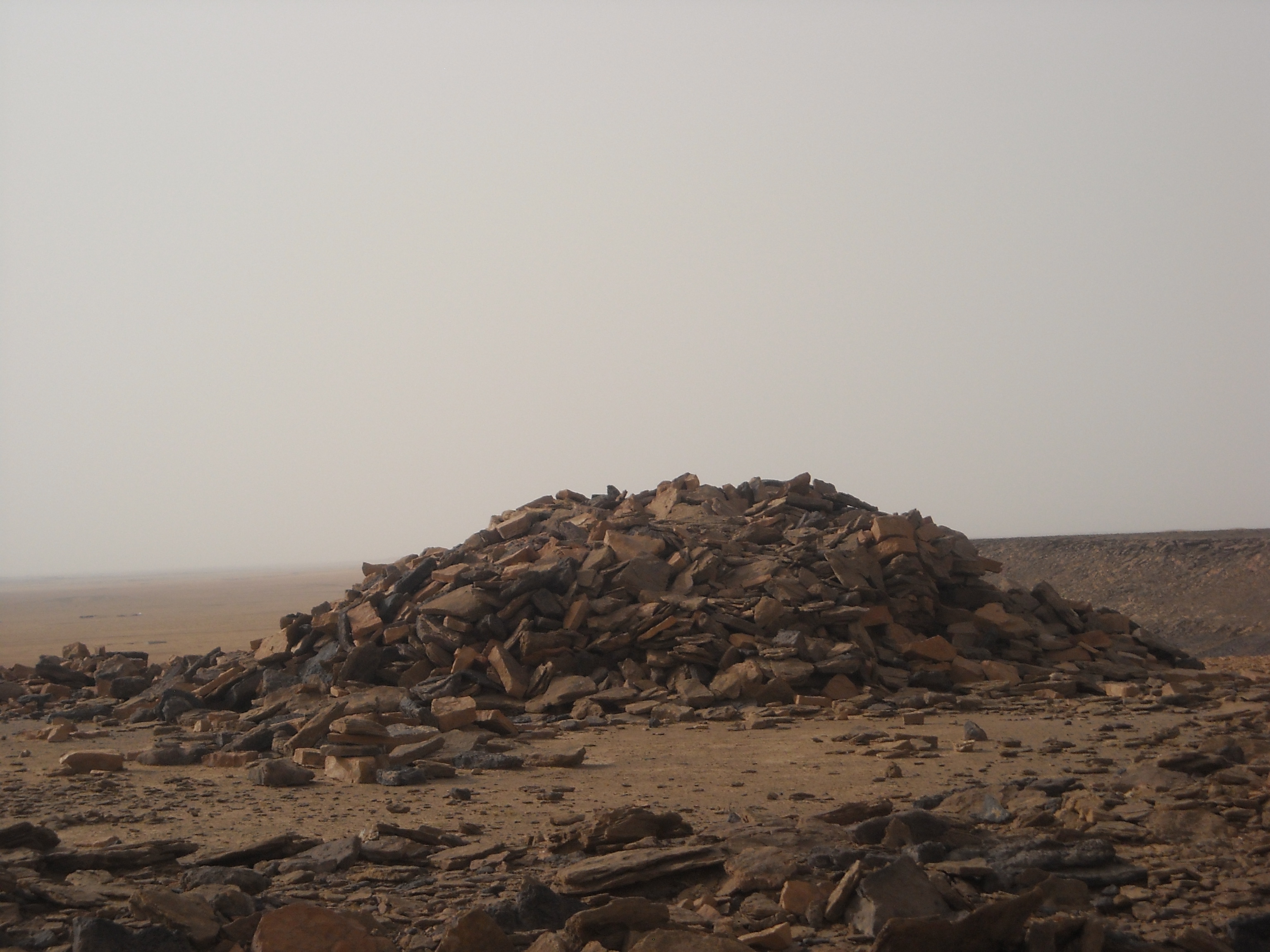
Is This What Armageddon Will Look Like?

Today has been an eventful day.. As I was heading out to the desert for a hike there was a light sandstorm, followed by a blinding rainfall. It’s flooded every week I’ve been here, so far. The weather had turned our convoy around, which was upsetting since I needed a break from the city. One of the old ladies in my car says, “Here… have some chocolate”. To my surprise, Vodka-filled chocolate. These sneaky Irish.. That didn’t quite make my day as she hoped, but thankfully my friend in a car far ahead called me about the perfect weather at the meeting point. 

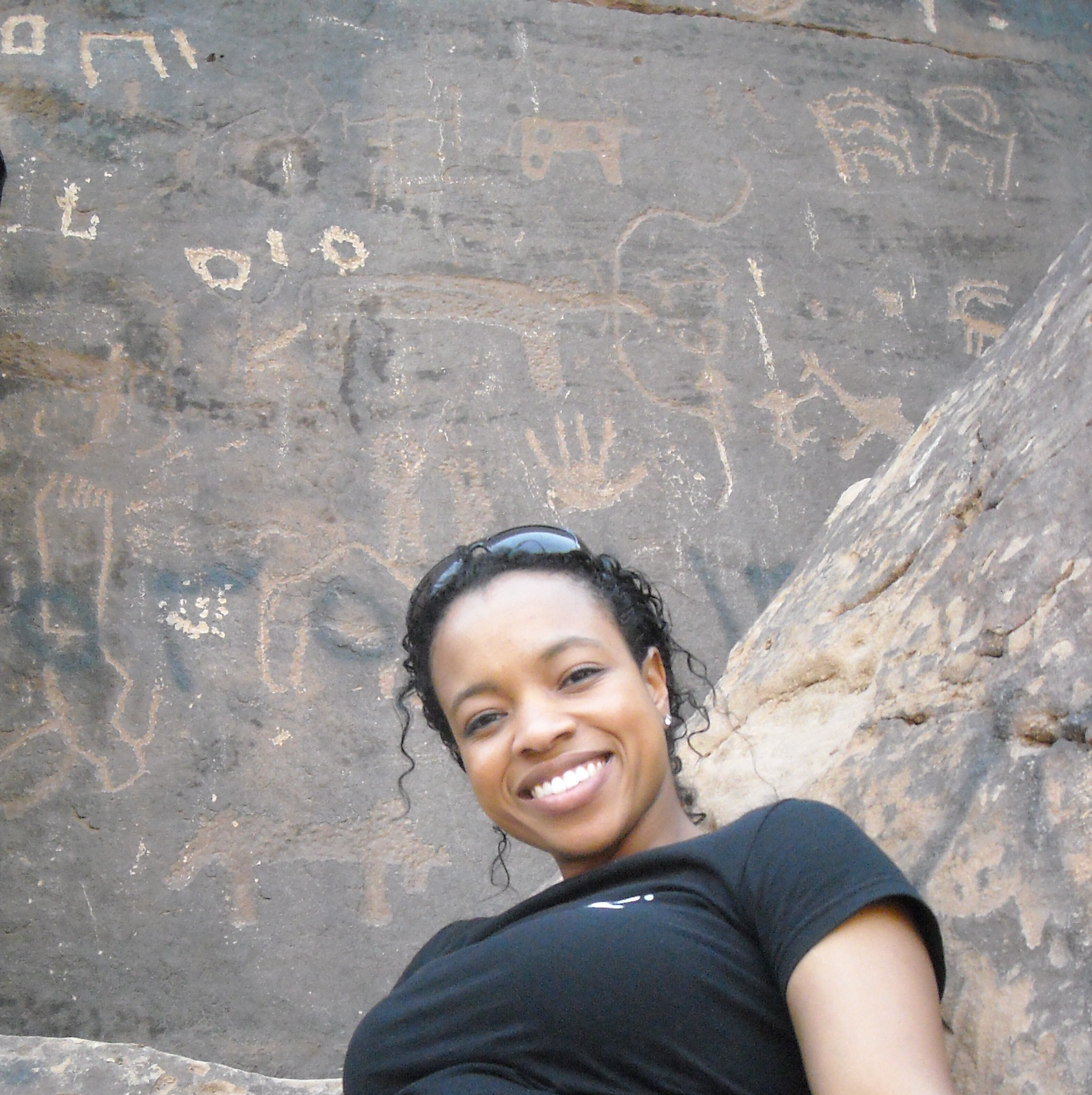
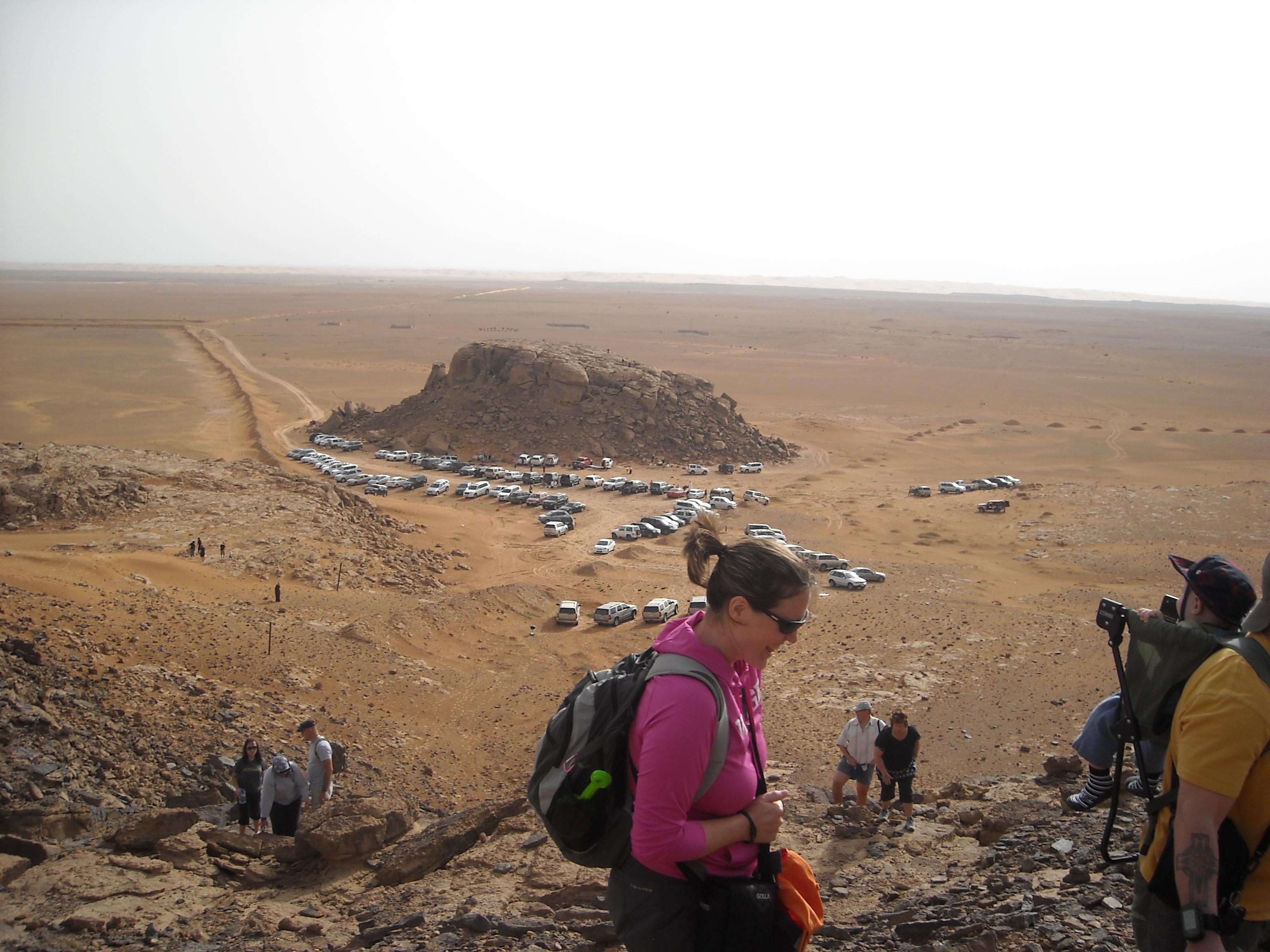
This hike was at the Graffiti Rocks, an archaeological event that I’ve been looking forward to. So after relaying the phone call and casting a vote.. we turned back around and gave the weather another try. Once we arrived, it was absolutely gorgeous! The sky was the clearest blue, that I’ve seen so far here. Not a cloud visible in the sky, yet the sun was not beaming strong at all. These trips are the highlights of my weekend, being able to congregate with foreigners from all corners of the world, hearing all the languages. All the women can’t strip off their abayas fast enough. All the kids can’t wait to break out in a run.

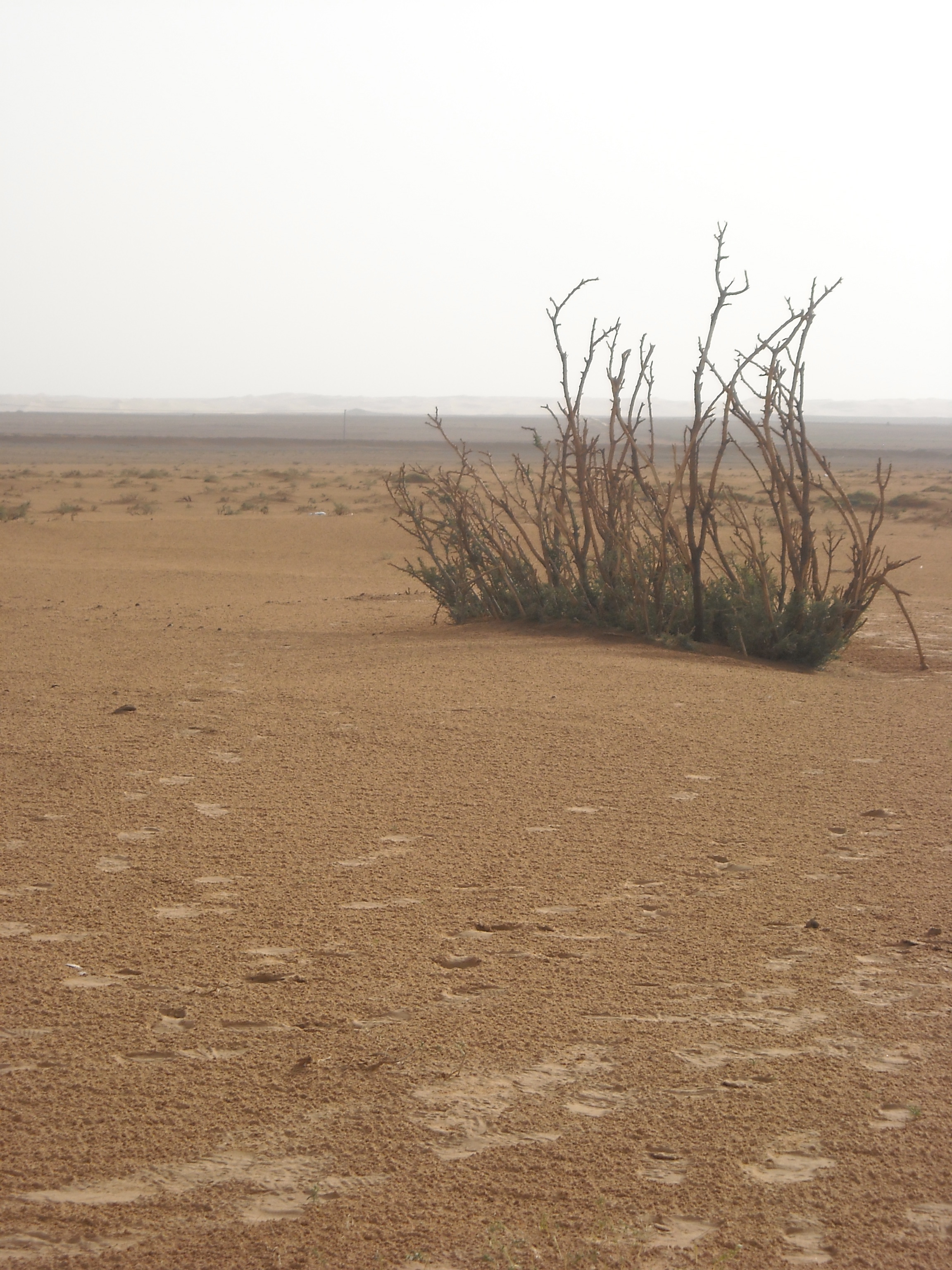
The landscape this week was different than the other locations. Instead of the rocky ground, that pounds your joints by the end of the hour hike.. this one was black rocky mountains, sitting on top of a soft red, beachy sand. Beautiful contrast. For these grounds, you have to venture out a little further from the city.

It was a difficult climb, so the smartest move is to step on the same secure rock as the previous climber. From a distance we’d probably resemble a trail of different colored ants. At the top of the mountain, we find many mounds of rocks, which happens to be ancient tombs. I guess that’s easier piling rock, instead of digging 6ft in this terrain.

We leisurely work our way down the hill with a Spaniard family behind us, which gives my roommate and co-teacher the opportunity to practice their Spanish, and for me to ease-drop on the French clique in front of us. I hate the amount of French language I’ve lost along the years. At the bottom there’s long, flat sandy ground. Enough to make a runner break out into a sprint. I told my crew to go on ahead a little, solely for this purpose. It was short run, but sweet.

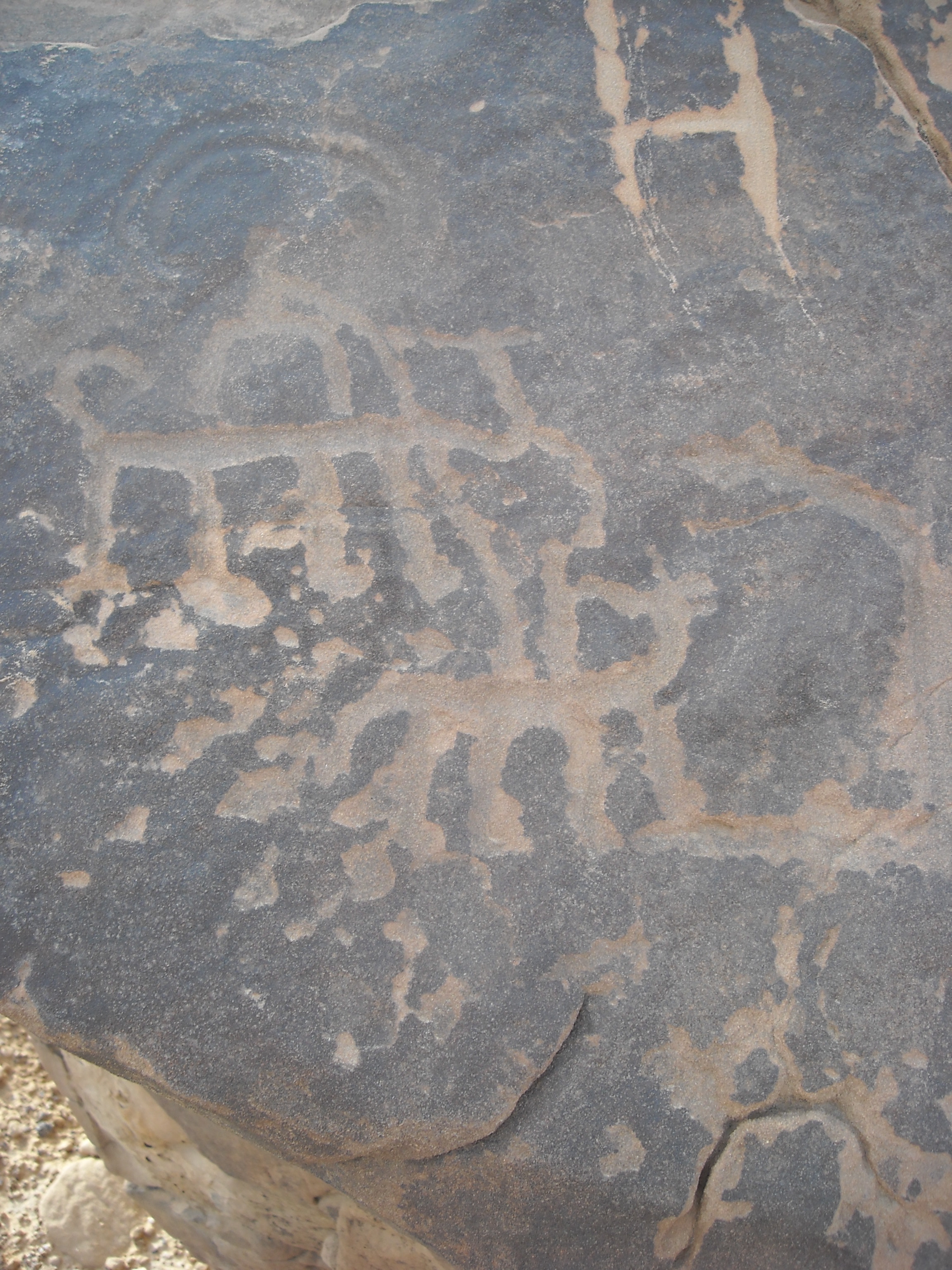
We come to a rest stop, where water and oranges are waiting. This is where we got our first glimpse at hieroglyphics. I interpret it to be a man riding on a camel. Then, directly above some fool defaced the rocks w/ initials. How in the world can someone be so naïve to add their modern marks to an ancient site, I have no idea! But it sorta pissed the anthropologist within me. We climb up another difficult hill to see graffiti of camel, antelope and maybe some sort of bird.. along with perhaps an ancient language that actually looks like Korean. Awesome finds!!

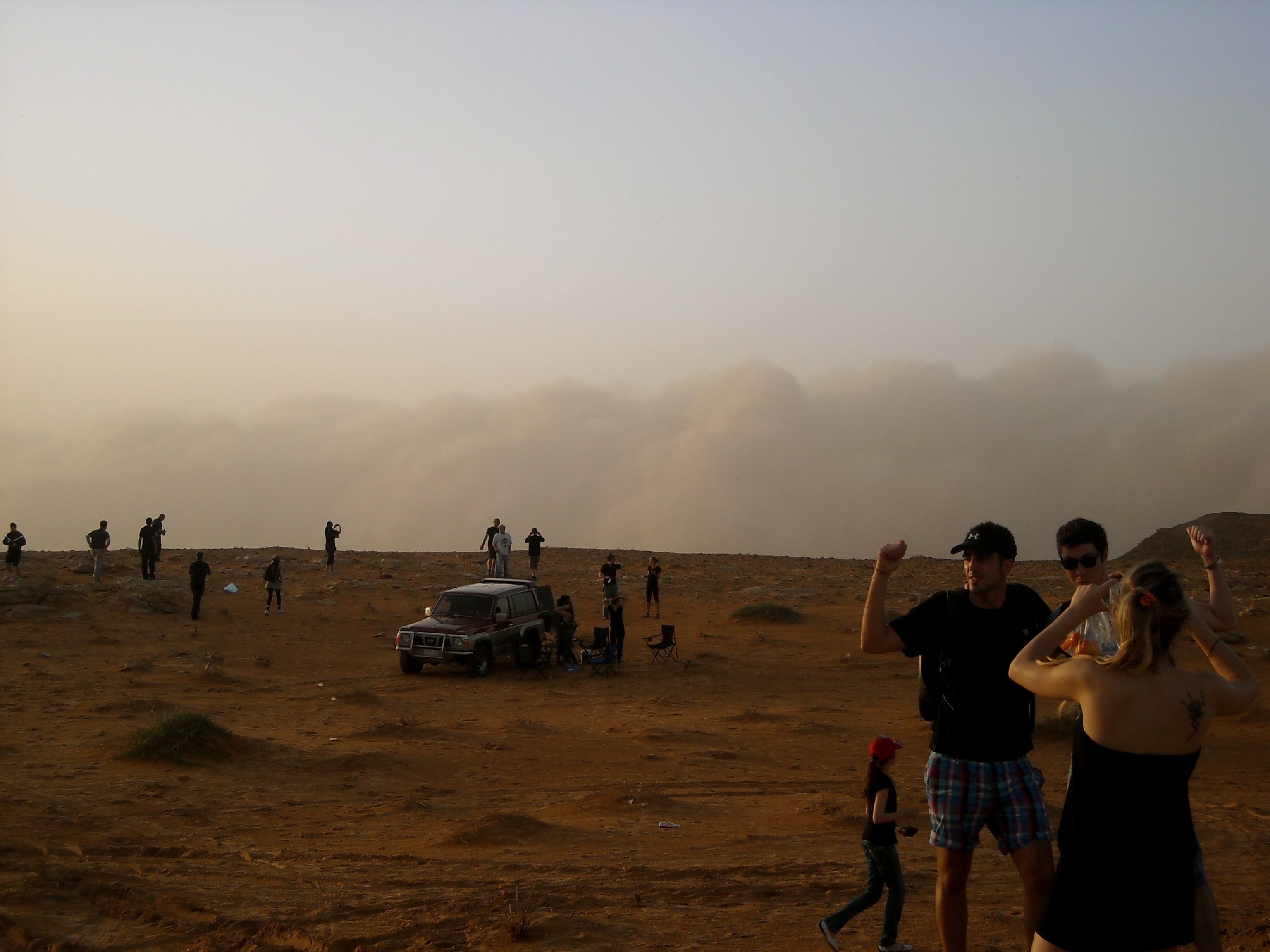
Hash Guy is at the bottom of the hill cooking sausages for 200 hungry hikers. The line goes through the parking lot. Some families are out on their beach towels and lawn chairs, around their private campfires. You look up and see the ship-shaped kite blowing, with the clear blue sky in the background… Then, we hear a yell… Some guy’s telling everyone to get down from the rocks and start packing up. We look to the left, and there’s a HUGE sandstorm coming over the hills. Imagine the movie “Twister”…

Everyone’s taking pictures and videos.. I’m one of these crazy ones, who wait til the last moment as well. So we jump into the car, and the storm basically chases us. The cloud looks so thick, that you could imagine the thing picking up our car and everything in its path. We decide to sit it out on the side of the highway for an hour, while the entire sky goes black. It eventually clears a little, and we start inching our way back to the city. By the way, I’m now typing this in the car, as we drive 10mph. Needless to say, it has been quite an interesting day.

Update: So apparently the storm traveled the 100km (60ish miles) to the city..I had my apt cleaned RIGHT BEFORE I left… Spotless! And I return to a thin layer of red dust on literally everything! Grr

6 Things I Learned from Living Abroad


6) How to distinguish needs from wants

If you’re a fan of the television show “House Hunters”, you will often see potential buyers go through long inventories of things that they need, like a hood over the stove, a jacuzzi to fit 5 people, a shower with a mountain view. I have down-scaled my “must have” list, after some of my travels. The basic American appliances that I have in the U.S. has slowly made it to my list of luxuries. This was realized the moment I arrived in the congested city of Seoul, S. Korea; where there was an odd absence of bathtubs and ovens in apartments. The memories of my spacious country bathroom, was now being compared to the ability to use the bathroom, shower and brush my teeth in the sink.. all at the same time.

Here in Saudi, when someone told me that I’d have to fill my washing machine by pan, pull the machine to a hole in the middle of the floor, drain it, and then hang dry.. I made sure that a conventional washer/dryer unit was added to my list. It’s the simple things that you miss the most, when everything is foreign to you. I no longer will assume that another country’s definition of a “need” and “want” is the equivalent to my own.

5) Your survival instincts come into play

Before leaving the US, I’ve often been asked.. “Do you know anyone out there?” “Can you speak the language?”.. “No?!? Sooo, how are you going to get around??” … You just gotta figure it out! We are all primitively programmed to fight for our survival. I’ve learned this best in Saudi. The 1st three days in the KSA, I lived off of cold pita bread and rice. I saw not one soul who spoke English or could direct me to something familiar. Each day, I inched a little further down my road, counting buildings and turns, so not to get lost. I took down as many taxi numbers as possible, so at least someone could direct me home. I immediately befriended the hotel staff, so that they’d felt comfortable loaning me money if things got tight. Survival! Without a lick of Arabic…. ‘Whatever higher power you believe in’ always seems to work the immediate things out. You can always figure out the details later..

4) At the same time, you’re never truly alone

There’s 100 English teachers on my campus. All of them came with the same expectations (or lack thereof). All with the same frustrations. All having the same questions… Outside of the school, there is the occasional English speaker; the taxi driver from Pakistan who wants to practice through conversation, the Filipina nurse who understands your homesickness, the Saudi woman who wants to soak up all things American. You start to realize that maybe running off to a new country, a new job, and a new culture… is not such a new idea.

3) You Start to Define Yourself

There are so many titles that one can take on these days.. Democrat/Republican, Gay/Straight, Christian/Atheist. However, quite a few people have a hard time defining why they feel so strongly about these titles. When you live in a country that challenges these labels, you start to see where on the spectrum you fall. Plus, you’ll have a firm example to back it up. Being in a conservative, Islamic country makes me realize how much of a liberal Christian I am.

2) Life should not be all that stressful

There’s a time to work, and there’s a time to play. As an ESL teacher abroad, you finally have ample time to pick up a new hobby, start and finish a book, choose whether or not you want to have a social life, or even be random and attend a ‘camel beauty contest’… As an expat, in general, you have a totally different itinerary from the tourists. Somehow, I’ve managed to experience various activities from having a few cookouts in the middle of an Arabian desert, to digging for fossilized seashells and desert diamonds (http://www.ehow.com/info_8127431_desert-diamonds.html). You no longer check out the city on someone else’s schedule and course. You tend to make your own fun, and it ends up being a way more interesting story to tell.

1) See life through someone else’s eyes

Yesterday, I was watching a music video on MTV. The American singer spent the whole video in a swimsuit. There was no pool, ocean, or water of any kind present. This sorta bugs me. It is one of the reasons why my greetings in Korea often came to “So, can you sing or dance like Beyonce?” or “Are you Obama’s sister?” And they are dead serious, in asking! In Saudi, out of the 5-10 English channels, these were also the American examples portrayed to a conservative country. I have seen some coverings to the extreme (women not showing an inch of the body, including eyes). Under these all-black coverings, I’ve always imagined two types of women: one who was very timid, or someone expressionless. Going against the stereotype, my students, the ladies under the veil, are some of the most outspoken, confident and dramatic girls I’ve ever met..

The Melting Pot Outside of the US

Back in my elementary school years, I always wondered what exactly went on at school during those joyous ‘Teacher Workdays’. Did they really come into work? What work was there to do, if I’m not there? Well, I had my 1st teacher workweek and it was actually quite interesting. Today and yesterday were lectures about culture. The Arabic teachers came in and gave us an insight on their lives outside of the classroom and how school was for them growing up, so that we could better understand our students. I’ll tell you more about that later.

But what really caught my attention was today’s discussion. It was our chance to understand this crazy mix of foreign English teachers. Our university has 100ish females of every race, nationality, and religion .. from White African to Black European Muslim to Korean American Christian. We each explained our immediate to distant backgrounds, and what has formed our sub-culture. The purpose of this exercise was for us to drop our stereotypes and understand how everyone define themselves. In the end, the hope was for everyone to accept the extreme Saudi differences, just as we’ve learned to accept our peers. Although the different accents and complexions are obvious, the explanation behind it provided an interesting history/anthropology lesson. For example, one of our teachers is an American albino from Detroit. “African-American” is her sub-culture. When asked why she is very strong-voiced about it, she comes to the conclusion that “on the outside (by being albino) she is unable to show it”. I understand and love how she answered. So often you hear of people trying to prove their identity.

After a while, it’s my turn. I defined my sub-culture as “Black American”. The Europeans caught the difference in my answer almost immediately, even though I said it subconsciously. Why am I “Black American” and she “African American”?? Well… I can’t tell you which African country my ancestors were from. I’ve never been to Africa. And what does a person who moves from Nigeria to the US call themselves (just as any immigrant who adopts American culture)? African-American….

What I do know though, is that I am Black. According to the Black European leading the discussion, putting a color for race is taboo and seen negatively. But what perhaps also makes my answer different, is being from the South, where “Black” and “White” are simply common titles to distinguish a group w/o being very specific, and can be also be found on many official form you fill out for govt, jobs, surveys, etc.

Another interesting difference I found in Black Americans and Black Europeans, were how we would acknowledge each other. Maybe you have noticed how two Black Americans, who have never met before may nod/smile/greet each other.. no matter in what country they cross paths. First and foremost, running into anyone who speaks English (of any race), is comforting abroad. An American outside of the US is an easy find, but bumping into another Black American is sometimes such a rarity, that you almost feel like you ran into your actual sister. How can you not be happy to see your family? But, for Black Europeans, I was told that I may not receive that mutual greeting. Because of their diverse nationality of their near ancestors (Sudanese, Caribbean, Egyptian), meeting someone from their home country trumps seeing someone of the same color.

I’m curious in knowing how any other cultures or races interact upon meeting, as Black Americans do? How do you define yourself, or do you? The comment box is open below.

*any racial bashing will be deleted

Image

Run for your Life

Next week, I WILL be buying my treadmill!!! I’m so excited to get back moving, that price is no longer a factor… In this immobile country, it’s quite easy for the first 10lb weight gain to come unnoticed. So far, I’m going up a 1lb per week. There are 52 weeks in a year…O_o

So… I’ve decided that along w/ 3 months of P90X, I’ll tack on 3 miles per day. As silly as it may look, I am strongly considering going for a run outside in my abaya, before it gets too hot.. and before I lose the guts to be a total oddball. But I’m sure the Saudis think foreigners are a weird bunch, anyway. I have 2 others who are up for this challenge. The most the police can do is ask us to walk.

Hopefully, all of this will combat this Saudi diet of shawarma in white, floured pita bread, stuffed with French fries. Or the university food that can be compared to elementary cafeteria lunches, in the US.. I’ll do my once a week cheat meal, since that’s worked for me in the past. And I finished my last juice and soda, yesterday. I’m slowly getting back into the habit of cooking my own food, even though I’m having a harder time finding all of the variations of turkey meat, as I like it. But, NO Excuses.. If I can manage to stay in shape here, I can anywhere.

Correction..

To keep the validity of my posts… I must update and say that yesterday, I have found my dumbbells and yoga mat at a different mall 🙂 They also sell treadmills O_O  (hmmmm…) … and lastly, I have been given free access to one of the compounds to use their private gym 🙂 🙂 … I think I’ll make it out here!

I’ve got a feeling we’re not in the U.S. anymore.

Yesterday, I finally got a chance to go window-shopping at a huge mall, here in Saudi. I almost felt at home, seeing all the familiar name brand retailers and restaurants. Notice, that I said “almost”.. The little reminders, that I’m not in the U.S., was constant. Not bad, but just gets you thinking “where in the world, am I?”

      1. So, I step into the first shop. One that I know well; Nike! I was quite surprised to see workout-wear for women, being that this city doesn’t seem to encourage female gyms. They are here, but in much smaller numbers than the males-only gyms, of course. I read that womens gyms were in abundance back in 2009 (Black, 2009). But due to the protest of the conservative crowd, who felt that these facilities take women away from their homes/husbands/children, many were shut down.Although, there were clothes..none of the fitness stores in this mall had equipment geared towards women. Now, this mall is massive! Why did I not find even one Yoga mat, dumbbell, or a real running shoe?
      2. As I go into the next store (“Express”), I’m humming “Con los ojos cerrados”… then I suddenly stop.. look up.. and realize there is no music playing. “Am I going crazy? Music does normally play in American stores, right??” I walk over to the next store, and same thing. No music! I talk to someone the next day about this, and she tells me so matter-of-factly that music is haram (sinful) according to Islamic Shari’ah. I know it shouldn’t be a big deal, but it’s SO odd going into a totally silent store, wanting to say something to your shopping buddy, but feeling that you need to whisper because your English is going to draw attention. My blond friend already stands out enough!
      3. I walk into a store with some really cute going-out wear. Where in the world, are these abaya-clad women going to wear these outfits?? Now, maybe I’m simply naïve to this other life of Arabian women.. but short skirts, tanks, tight and sheer? These are the same women who wear skirts to their ankles and loose shirts to their elbows, to class… and the abaya in public.
      4. ALL of these stores were ran by men, even MAC and Victoria Secrets.. These are the same men who are not to see a woman “uncovered”, except for his wife and family members. I must also say that Victoria Secrets had absolutely no lingerie.. Apparently men are not banned from selling female underwear .. So, where are they getting them from is my next question. The only females that I have seen working so far, in this country, were the foreigners.. and a few Saudis in salons/spas. But according to the Buchanan’s article, women will soon be allowed to work in this industry (Buchanan, 2012).
      5. In these retail stores, I almost never saw a dressing room.. This is a shop-happy culture. With so much money and free time, what else are the women to do? A dressing room would get a lot of use in this country. But, instead there’s a pretty relaxed return policy.

Little differences, but enough of them to make an interesting experience..

Black, I. (2009). Saudi Women Face Gyms Ban. The Gaurdian.Retrieved on March 13th, 2012 from <http://www.guardian.co.uk/world/2009/apr/26/saudi-women-sports-ban>

Buchanan, E. (2012). Women Only to Work in Saudi Arabia Lingerie Shops. BBC News. Retrieved on March 13, 2012 from <http://www.bbc.co.uk/news/world-middle-east-16412202 >

The Abaya

The first question I’m asked by family and friends after they found out where I was going.. “Do you have to cover up??”… Yes, I do have to, wherever a man is present. In the KSA, women can only be uncovered around other women, her husband, and their family. So basically, all of these clothes I brought for whatever occasion will never be seen accept at work (my all-women’s university) and when I am in foreign-friendly areas (desert hikes and compounds).

The abaya is a long cloak, that is traditionally all-black. But you will often find today’s abayas with different material, designs, colors and sparkles on the sleeves and the base. As a non-muslim foreigner, this robe is the only strict requirement to wear in public. The niqab, is a piece that covers the face, besides the eyes. I am not required to wear this. However, it seems to be quite helpful during this sandstorm season. Covering your hair with a scarf or hijab, is less enforced for non-muslims, but I’m sure you’re more respected if you don’t go against the grain. Everyone carries a scarf just in case they are approached by the muttawa, the religious police.

There’s always going to be a fuss about it. But as extreme and restrictive the abaya may seem to some, it’s quite easy to get used to. Out of all of the factors that contribute to daily stress, this attire is the least of my worries. Yet, is the main thing people want to know about. The language and the segregation, is the big adjustment! My roommate actually remains covered behind the locked doors of our apartment, which probably makes me look like a heathen in my loungewear. I’ve seen some pretty cute abayas.. and I already own 4 (3 I’m in the process of getting altered) and a 5th one being designed. I’m thinking about putting a modern/Latin spin to it 🙂 ..

In the compound, I was actually ordered to remove my abaya.. In public.. It almost felt like they asked me to remove my shirt. Last week, I went out into the desert “uncovered” and even though it felt GREAT for the sun to hit my skin..Strangly, for a second, I felt naked in front of all of the western men. Of course I got over that though, and enjoyed the rare moment. But this lets me know that perhaps the Saudi women, who have been covered all of their lives vs. my two weeks, welcome this conservative attire.. instead of seeing it as a command. Through their perspective, being uncovered in public is kind of like that question, “have you ever dreamed that you were naked on stage?”

Thinking on my Feet!

I have been a substitute teacher for the past 3 days, I have found these Saudi ladies to be incredibly smart with grammar rules. They point out prepositions, pronouns, and past participles with ease. Honestly, I have to think twice about these rules… But their main issue seems to be with creative thinking, like making their own sentences/stories. I received an interesting explanation of this, from a senior teacher:

These girls spend all of their years in religious schools, where they are asked to memorize rules and the Koran. Ask of any passage, and they are likely to quote it word for word. Therefore, excelling has always been tied to rules of some sort of book. So when it’s time for them to voice their own opinion… sadly, they don’t seem to have one. This is my first impression, though. And being in a prep university, especially if they want to survive universities abroad, having an opinion is necessary.This is what I would love to teach them! However, this does not seem like the best country for free-thinkers. My teacher orientation was compiled of “don’t do”s.. and in short, I can’t mention anything connected to politics (women’s ban on driving, gender segregation), religion (which involves every aspect of their life), or even the word “pork”. So when I give examples to explain a definition, or when I ask or answer questions… it’s smart to think like a Saudi Muslim, so not to offend or revolutionize anyone.. especially since we don’t know when/if we’re teaching one of the Saudi princesses.

I believe I actually taught one today.. During the last 10 minutes of class, we’ve been having open discussion. After they asked about my small family (1 brother and 1 sister).. one girl who had a certain air about her, says that she has 16 brothers and sisters (her father has 2 wives). Besides ‘The Duggars’, Saudis often have large family sizes. I was also asked whether or not I had boyfriend. Arab muslim answer, “No”.. Then, came the trick question. “Teacher, do you have children?” .. Me: “How can I have children, if I’m not married???”.. “Oh, yes, yes.. right!” ..

Gotta keep thinking on my feet!

Culture Shock

I fell into a little rut today.. And realizing that it’s totally understandable of why the culture shock hits you early here.

Unlike Korea, where you can find multiple Americanized food chains on every corner, natives with a similar sense of style, and same rules/restrictions…Saudi Arabia is the total opposite. Abiding by a strict way of living, being gender segregated, living in a new language, around new people, being away from loved ones, and starting a new job… perhaps, I could have brought a Xanax or two. I was reading the stages of culture shock on Wikipedia, and this “negotiation phase” is supposed to hit you on month 3. I’m on day 5… BUT, instead of looking at this negatively, I have high hopes that the “adjustment phase” will come early as well.  I can see many personal, professional, and financial benefits that will come from this experience, it’s just a lot to take in at once! I also don’t to want to make this KSA blog all nice and frilly. Gotta keep it real. So with all that said, I will definitely have my moments here.. I’ll just have to find ways to keep my life as close to what I’m used to, try to understand their culture, and realize that they will not change for me.. aka: I must Adapt! Here’s the plan:

  1. Figure out what the health-conscious Saudis eat.. It doesn’t seem like turkey is as easily available and can easily go into carb overload.
  2. Drop expectations! Being a control-freak, especially with time/planning, this will be the hardest one.
  3. Get a schedule of their 5 daily prayers, because everything shuts down for 45min prayer. To wisely use of this time, avoid shopping and replace with an indoor activity
  4. Buy a treadmill!!! With the prices of the limited female gyms, and it being near impossible to run outside.. in an abaya and hijab.. w/o someone assuming you stole something, perhaps its beneficial to build an at-home gym. Thank God, I brought my P90X and Insanity!
  5. Do things to make life feel “normal”.. Although this country seems to operate thanks to the abundance of servicemen and women, I found that maybe I prefer to do my own cleaning, taking in of own groceries, picking up my own food orders.
  6. Make connections with expats: Find groups that fit all of my interests, whether its physical activities or social gatherings
  7. Make connections with natives: This could help with language exchange and a better understanding of the culture.

Culture Shock. Wikipedia. <http://en.wikipedia.org/wiki/Culture_shock&gt;